

We now offer Virtual Mediations using Enhanced Video Conferencing
Originally published: January 2023 | Updated: November 2025

Divorce doesn’t have to turn into a bitter battle that tears families apart. Plenty of couples in Florida realize that working together through their separation can save time, money, and a whole lot of emotional pain for everyone involved.
An amicable divorce in Florida lets both spouses work together on major decisions, such as property division, child custody, and support, without dragging things into court.
When couples decide to work together instead of against each other, the process usually moves faster and costs less. This approach also shields kids from unnecessary conflict and stress.
A peaceful divorce only happens when both people commit to open communication and fair solutions.
The key is knowing a few strategies to keep things calm and cooperative. From handling tough feelings to picking the right legal process, some steps can help couples navigate divorce with a little more respect and dignity.
These seven tips can turn what might feel like a painful ordeal into a more manageable transition for the whole family.

An amicable divorce in Florida means couples end their marriage through cooperation and mutual respect, not courtroom fights. This fits right into Florida’s no-fault divorce system and helps reduce stress and conflict.
Florida uses a no-fault divorce system. Couples don’t have to prove wrongdoing—just that the marriage can’t be fixed.
An amicable divorce in Florida is a cooperative legal process in which both spouses work together to reach an agreement on major issues such as property division and child custody, avoiding a trial entirely.
The cooperative approach really leans on communication and compromise. Both parties discuss what they need and work together to find solutions that actually work for everyone.
This is different from contested divorces, where couples fight over every detail. Instead, spouses try to treat each other with respect and often use mediation or collaborative divorce.
Key benefits include:
Florida has adopted no-fault divorce laws that make amicable divorces possible. Couples can go down this peaceful path even when ending their marriage feels tough.
Before starting an amicable divorce in Florida, couples must meet a few legal requirements, such as living in the state for 6 months and proving the marriage can’t be saved.
Florida divorce law also offers a simplified process for couples who meet certain conditions.
At least one spouse must have lived in Florida for 6 months before filing for divorce. This rule applies to every divorce in the state.
The person filing has to prove they’ve lived in Florida for the required time. They can use:
If both spouses have just moved to Florida, they have to wait until one of them hits the six-month mark. This waiting period ensures the Florida divorce law applies to their case.
Military families have a few special rules. Active duty service members stationed in Florida can count their assignment time toward the residency requirement.
Florida uses a “no-fault” divorce system. Nobody has to prove someone did something wrong to end the marriage.
The main ground for divorce is the irretrievable breakdown of the marriage. That just means the marriage is broken beyond repair and can’t be fixed.
Courts rarely ask for proof that the marriage can’t work. Most judges accept this reason if both spouses agree to divorce.
If only one spouse wants out, the court might order counseling, but this doesn’t happen much. Usually, the spouse who wants the divorce just needs to say the marriage is over.
The no-fault system helps keep the divorce process peaceful. Couples don’t have to blame each other or dig into private details.
Florida has a faster, cheaper option called simplified dissolution. This is for couples who agree on everything and meet some strict requirements.
Eligibility requirements include:
The simplified process takes at least 30 days. Regular divorces take several months, sometimes longer.
Couples have to divide all property and debts before filing. They can’t ask the court to make those decisions for them.
This option saves money on attorney fees and court costs. But couples give up the right to appeal the final judgment.
Most couples seeking an amicable divorce in Florida don’t qualify for simplified dissolution because they have children or property disputes.
Pointing fingers just makes divorce harder. When spouses blame each other, fights get worse and costs go up fast.
The blame game turns partners into enemies. Instead of working together, they start working against each other. Then even simple decisions take forever.
Try fixing issues instead of figuring out who caused them. Approach conflict with an “us against the problem” attitude instead of fighting each other.
Ways to Stop Blaming:
Keep Kids Out of It
Kids shouldn’t hear their parents blaming each other. They need to feel safe and loved by both sides, no matter what.
Think About the Future
Blame just keeps people stuck in the past. Amicable divorce is really about compromise, not winning. Nobody gets everything, but both can get a fair deal they can live with.
Sometimes couples need a neutral person to help them talk. Mediators can guide conversations away from blame and toward solutions that work.
Professional help can make a Florida divorce more peaceful and a lot less stressful for everyone.
If you’re ready to get started, call us now!
Divorce brings up strong feelings—anger, sadness, fear. These emotions can make it tough to think clearly when it’s time to negotiate.
Negative emotions can disrupt concentration and damage relationships. They mess with the parts of the brain that people need to reason and make good choices.
When spouses feel angry or hurt, they might focus on revenge rather than on fair solutions. That’s not exactly productive.
People should give themselves some time to process the loss of the relationship before diving into divorce logistics. That way, they can approach negotiations with a clearer mind.
Getting Professional Help
Different types of support can really help:
Spouses have a better shot at negotiating well when they’re “divorce ready”. That means dealing with the raw emotions first.
Being divorce-ready is about feeling calm enough to think strategically. It’s about not focusing on making an ex pay for past wrongs.
Each person should recognize their emotional triggers before negotiating. Triggers might be feeling blamed or ignored.
Knowing what sets you off can help you stay calm during talks. And that’s half the battle, isn’t it?
Divorce requires some give-and-take from both sides. Neither spouse is going to get absolutely everything they want.
Successful compromise means:
Common areas that need compromise include:
Plenty of couples discover that being willing to compromise leads to agreements both people can actually live with. This kind of approach tends to reduce conflict and keeps costs from spiraling.
Before negotiations start, each person should:
Collaborative divorce goes much more smoothly when both spouses come in ready to talk and negotiate. If you stick to rigid thinking, you might end up with a longer, more expensive fight in court.
Smart compromise strategies include:
Compromise doesn’t mean you have to give up everything that matters. It’s about finding solutions so both people can move forward with their lives in a positive way.
If kids are involved, their well-being has to come first—no question. Florida courts use the “best interests of the child” standard when deciding custody and time-sharing.
Parents should focus on what helps their children feel safe and stable. Setting aside anger and working together as co-parents is tough, but it’s necessary.
Key areas to consider include:
The court looks at what’s best for the child’s life and well-being, not just what the parents want. If parents show they can work together, they’re more likely to reach better agreements.
Child custody arrangements work out best when both parents communicate openly. Sharing info about school, medical stuff, and the kids’ needs really matters.
Child support should get sorted out fairly—money shouldn’t become a weapon. Kids need financial stability from both parents, plain and simple.
Effective co-parenting keeps the focus on the kids rather than on old relationship drama. Parents who do this usually find the whole divorce process less stressful for everyone.
The divorce process you pick really changes how things go. Not every option fits every couple, so it helps to know what’s out there.
Uncontested Divorce is the simplest. Both people agree on the big stuff—property, custody, you name it. It’s faster and costs less.
Mediation brings in a neutral third party to help couples talk through their problems. Mediation makes it easier to resolve issues without dragging things into court. It’s private and, honestly, less stressful.
Collaborative Divorce means lawyers agree not to go to court. Everyone works together to find fair solutions. It’s more about problem-solving than fighting.
Here are the main options:
| Process Type | Best For | Time | Cost |
| Uncontested | Full agreement | Fastest | Lowest |
| Mediation | Minor disagreements | Medium | Medium |
| Collaborative | Complex issues | Medium | Higher |
| Litigation | Major conflicts | Longest | Highest |
Traditional litigation should be the last resort if you want an amicable divorce. Courts make the final call, and that can wreck relationships and drain your wallet.
Think about your own situation. Do you and your spouse talk things out? Are you able to compromise? Any complicated finances?
The proper process helps couples stay respectful and cooperative. It also protects kids from extra stress and drama.
Mediation gives divorcing couples a private and cost-effective alternative to long court battles. Both parties work with a neutral third party to reach fair agreements.
Unlike the usual litigation, mediation encourages mutual agreement and understanding. The mediator guides the conversation but doesn’t decide for you.
Key Benefits of Mediation:
Couples keep full control over their mediation agreements. They can discuss child custody, property, and support at their own pace.
Mediation really works when both spouses want to skip the endless court stuff. Successful mediation needs clear communication, flexibility, and a willingness to work together for fair outcomes.
Florida courts often push for mediation before scheduling trials. Many couples find that this route reduces conflict and keeps family relationships stronger.
Preparation really matters for mediation. Couples should gather financial documents, know their priorities, and try to keep an open mind.
Professional mediators help guide tough conversations about sensitive topics. They make sure both sides get a chance to speak up and be heard.
Mediation usually wraps things up in weeks, not months, compared to the traditional divorce process.
The divorce might be finalized, but the relationship doesn’t just disappear—especially with kids in the picture.
Building a healthy post-divorce relationship takes effort from both people. It means letting go of old hurts and focusing on what truly matters now.
Clear boundaries are essential. Setting healthy boundaries with an ex helps reduce conflict and provides everyone with more stability. These boundaries protect everyone, not just the adults.
Communication Guidelines:
Respect is non-negotiable. Former spouses need to treat each other with basic courtesy. That means no name-calling, no insults, and definitely no digging up old mistakes.
Kids do best when parents cooperate and keep things peaceful. They shouldn’t have to hear complaints about the other parent or get pulled into arguments.
Key areas for cooperation include:
Flexibility goes a long way. Life changes, and sometimes schedules need to shift. Being willing to compromise makes co-parenting a lot easier.
Processing emotions separately from practical matters can help maintain healthy boundaries. Personal feelings shouldn’t get in the way of necessary communication.
Professional counselors can teach better communication skills. Plenty of divorced parents find family therapy useful for building new patterns.
If you’re ready to resolve issues peacefully, consider working with Ann Goade to create a fair agreement that keeps stress low for everyone. Contact us.
If you’re ready to get started, call us now!
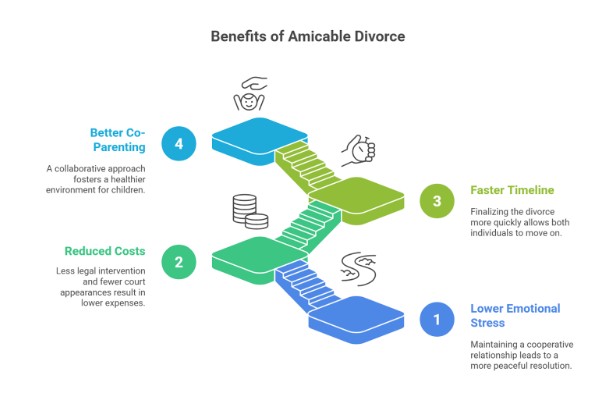
An amicable divorce saves time and money and protects kids from ugly conflict. Couples who work together often create better solutions for property, alimony, and co-parenting.
Divorce is always tough emotionally, but taking an amicable approach lowers the stress for everyone. When couples choose to cooperate instead of fight, they skip the drama of drawn-out court battles.
Research shows parental conflict hurts kids’ well-being more than divorce itself. An amicable divorce protects children from seeing their parents argue over property or custody.
Key emotional benefits include:
Spouses who cooperate keep their self-respect and avoid public scenes. They get to focus on healing instead of fighting, and skip the emotional fallout from aggressive legal tactics.
Traditional divorce litigation can cost a fortune in legal fees. An amicable divorce slashes those expenses by avoiding court and reducing attorney hours.
Cost savings come from:
Couples save money by agreeing on property without endless appraisals or expert witnesses. Mediation can settle alimony faster than court hearings ever will.
Many people use online divorce services or just limited legal help instead of hiring a lawyer for everything. This works well if both parties are willing to cooperate on big decisions.
Legal fees drop big time when couples avoid court. The money saved can help both people start their new lives with more financial breathing room.
Court schedules can drag out traditional divorces for months, sometimes even years. With an amicable divorce, couples set their own pace and don’t have to sit around waiting for court dates.
Timeline advantages include:
Most amicable divorces in Florida wrap up in about 3-6 months. The drawn-out, contested cases? Those can stretch to 12-18 months, or more.
Couples get to schedule meetings when it works for them, not the court. They handle alimony and property division at their own speed. Quick resolution reduces stress and lets everyone start healing sooner.
Kids really do best when their parents keep things respectful after a divorce. An amicable process lays a foundation where children don’t feel caught in the middle of warring parents.
Co-parenting improvements include:
Parents who split amicably can shape custody schedules to fit their family, not some rigid court order. That kind of flexibility helps kids settle into their new routines.
Positive post-divorce relationships often start with a respectful divorce process. Parents can still team up for school events or doctor visits.
Kids notice when their parents cooperate instead of fighting, and that brings a bit of security during a tough time.
If you’re ready to get started, call us now!
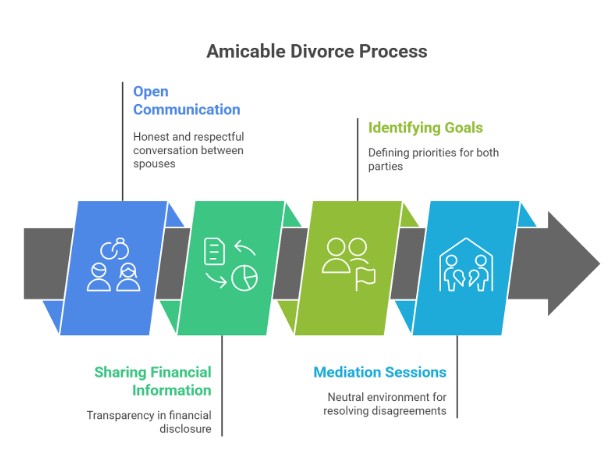
An amicable divorce usually follows a step-by-step process in which both spouses work together respectfully to resolve the big issues.
The whole thing leans on cooperation, transparency, and at least a little mutual respect from start to finish.
The foundation of any amicable divorce process is an honest, respectful conversation. Both sides need to talk openly about needs and expectations, and try to keep blame out of it.
Most couples start by agreeing that the divorce is mutual. Then they talk about their main goals—kids, money, property—whatever’s top of mind.
Key communication guidelines include:
Writing down talking points before a conversation helps. It keeps things on track and stops emotions from taking over.
Some folks bring in a counselor or mediator early on. These pros make tough talks easier and teach better ways to communicate.
Financial transparency sits at the heart of a smooth divorce negotiation. Both people need to lay out all their income, assets, debts, and expenses.
Usually, it starts with gathering paperwork—tax returns, bank statements, investment accounts, retirement funds, and credit card statements. Three years’ worth is a good rule of thumb.
Essential financial documents include:
Each person fills out a detailed financial affidavit. That means listing every asset, debt, source of income, and monthly expense. It’s important to get this right—Florida law requires full financial disclosure in divorce cases.
Some couples use financial software or hire an accountant to keep things organized. Having a pro involved can make sure nothing slips through the cracks.
Before any formal negotiation, successful couples sit down and figure out their own priorities—and the ones they share. This step keeps things focused on what matters most.
Parents usually put their kids’ well-being first. They’ll talk about custody, schools, and how to keep things as stable as possible for the kids.
On the financial side, it’s about ensuring both people can maintain a decent standard of living. Housing, retirement, kids’ education—those are the big ones.
Common priority areas include:
Sometimes, even if a couple is splitting up, they realize their goals aren’t so different after all. That can really smooth things out.
Writing these priorities down is smart. It gives you something to come back to when negotiations get heated or emotional.
Mediation provides a neutral environment where couples work with a trained professional to sort out disagreements. The mediator helps guide the conversation but doesn’t actually make decisions for anyone.
While a peaceful divorce works for many people, it’s not always safe or realistic. Domestic violence, abuse, power imbalances, or other safety concerns call for a different approach—with stronger legal protection.
Domestic violence makes real cooperation impossible. If one spouse has hurt the other, the victim might just agree to anything out of fear.
Warning signs include:
Victims sometimes downplay what’s happening or hope things will change. But divorce stress usually makes violence worse, not better.
Safety concerns during divorce:
Court-issued protective orders can keep spouses apart. That kind of legal protection is crucial when violence is a possibility.
Emotional and psychological abuse can be just as damaging as physical violence. Coercive control involves one person using patterns of behavior to dominate or isolate another person.
Common forms include:
Abusive partners might seem charming in public, but keep tight control at home. They could pretend to cooperate, only to use the divorce process for more manipulation.
Red flags during divorce talks:
Professional mediators can spot these patterns, but they can’t give the legal protection abuse victims need in divorce.
Significant gaps in knowledge, resources, or decision-making power can make negotiations unfair. One spouse might struggle to stand up for themselves.
Financial power imbalances:
Educational or professional gaps:
Some people have been left out of financial decisions for years. They might not know about retirement accounts, property values, or debts. That makes it nearly impossible to negotiate fairly.
Power dynamics with children:
When safety’s at stake, protecting yourself and your kids absolutely comes before keeping things friendly. Sometimes, the situation just isn’t safe enough for cooperative talks.
Immediate safety concerns:
Child safety issues:
Financial safety:
If you’re facing any of these, you’ll want to work with a family law attorney right away. They know how to help you get protective orders, set up safe custody plans, and secure emergency financial support.
Legal protections available:
The court system steps in with real safeguards when things get dangerous. Mediation and collaborative divorce can work for some, but let’s be honest—when abuse or violence enters the picture, safety has to take priority.
Ann Goade can help you navigate a calm, cooperative divorce through guided mediation designed to reduce conflict and protect your family’s stability. Schedule an appointment.
How long does an amicable divorce take in Florida?
An amicable divorce in Florida usually takes 4–12 weeks, depending on how quickly both spouses gather documents and reach agreements. Couples who qualify for simplified dissolution may finalize even faster. Mediation typically shortens the process because most issues are resolved in one or two sessions instead of months of litigation.
What is required to file for an amicable divorce in Florida?
Florida requires that one spouse has lived in the state for at least six months and that the marriage is considered “irretrievably broken.” Couples who agree on property division, support, and parenting matters can avoid litigation and use mediation or simplified dissolution to complete the process cooperatively.
Do we need lawyers for an amicable divorce in Florida?
No, hiring lawyers is not required for an amicable divorce, but legal guidance is recommended. Many couples use mediation to reach an agreement and then have an attorney review the final documents. This protects both spouses while still keeping the process cooperative, affordable, and low-conflict.
Can we use simplified dissolution in Florida?
You can use Florida’s simplified dissolution if you have no minor children, agree on all issues, waive alimony, and both spouses are willing to attend the final court hearing. This is the fastest and easiest option for couples who already agree on property and financial matters.
Is mediation confidential in Florida?
Yes. Florida mediation is confidential by law, meaning discussions and proposals cannot be used later in court. This protects both spouses, encourages honest communication, and helps couples resolve disagreements without fear that their words will be used against them in future legal proceedings.
How much does mediation cost in Florida?
Mediation costs vary, but most Florida mediators charge hourly rates between $100 and $350, depending on experience and location. Many couples resolve their divorce in one or two sessions, making mediation significantly more affordable than litigation, which can involve months of attorney fees and court filings.
What if my spouse refuses to cooperate?
If one spouse refuses to communicate, hides information, or acts aggressively, an amicable divorce may not be possible. Mediation requires good-faith participation. In these cases, you may need legal intervention, court-ordered disclosure, or guidance from a family law attorney to protect your rights and ensure safety.
Can we still have an amicable divorce if we disagree on a few issues?
Yes. Many couples resolve disagreements through mediation, even if they initially disagree on some issues. As long as both spouses are willing to negotiate respectfully, a mediator can help find fair compromises. Minor disputes don’t prevent an amicable divorce — only persistent conflict or refusal to cooperate does.
Editor’s Note: This article was updated in November 2025 to include new data and examples.

Proudly Serving Areas
Navigation
Practice Areas