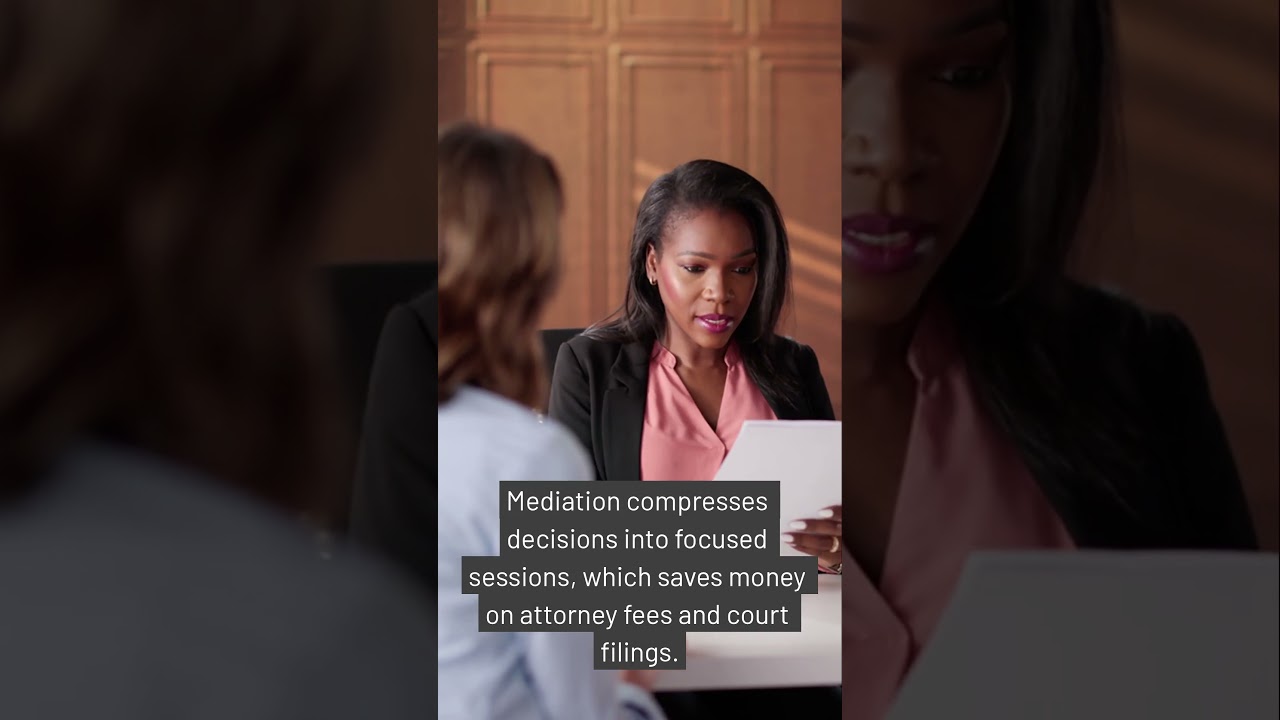
Mediation conversations break down the moment one party shifts from proposals to accusations — and the session loses its footing fast. Replacing “you never” with “I’m asking for this” changes the dynamic immediately, keeps the mediator in control, and moves both sides toward resolution instead of reaction.
When your mediation session feels like it’s unraveling, Ann Goade, Florida Supreme Court Certified Family Mediator, helps parties find language that works even when emotions are running hot. Book a session before the next conversation costs you more than it should.
Key Takeaways
- Speak in proposals, not accusations — “I’m asking for” outperforms ‘you always/never’ in every session.
- One point at a time keeps the room focused; emotional pile-ons stall progress and exhaust the mediator.
- A 5-minute break before a reactive response protects the session from damage that’s hard to walk back.
- The mediator’s job is to reframe heated statements into solvable issues — let them do it.
Why Mediation Conversations Blow Up in the First Place
Most mediation sessions don’t collapse because the issues are unsolvable. They collapse because the language shifts from problem-solving to blame-assignment — and once that happens, both parties stop listening.
Accusatory framing triggers a defensive response. When one party opens with “you never” or “you always,” the other party stops processing the content and starts formulating a rebuttal.
The mediator is now managing two defensive positions instead of one shared problem. That loop — accusation, defense, counter-accusation — is the single most common reason sessions stall before any real progress is made.
The Language Shift That Changes Everything
The fix is structural, not emotional. Swapping accusatory language for proposal language doesn’t require either party to feel calm — it only requires them to frame their position as a request rather than a verdict.
“You never consider what I need” becomes “I’m asking for a schedule that accounts for my work hours.” The content is the same. The framing is entirely different. One invites a fight. The other invites a response.
Ann Goade works with parties in Florida family mediation to identify the exact phrases that are derailing their sessions and replace them with language the other party can actually hear.
Why “You Never” and “You Always” Are Session Killers
Absolute language — “never,” “always,” “every time” — is almost never literally true, and the other party knows it. The moment they hear it, their focus shifts from the issue to the inaccuracy. They’re no longer engaged with the problem. They’re building a counter-argument.
Proposal language sidesteps that entirely. It focuses on what you’re asking for going forward, not what the other person has done wrong in the past. That distinction keeps the session moving.
One Point at a Time: Why Focus Protects the Session
Mediation sessions derail fastest when parties try to resolve every grievance in a single exchange. Emotional pile-ons — stacking issue after issue into one statement — overwhelm the other party and make prioritization impossible.
The mediator can only work with one solvable issue at a time. When a party presents three complaints wrapped into one accusation, the mediator has to untangle the statement before any progress can be made. That takes time, raises tension, and often triggers a mirror response from the other side.
How to Stay Focused When You Have a Lot to Say
Prepare your top priority before the session starts. Identify the single issue that, if resolved, would change the most. Lead with that. Let the mediator guide the sequencing of everything else.
If the other party introduces a new issue mid-discussion, don’t follow them down that path. Note it, return to your point, and let the mediator manage the agenda. Discipline in sequencing is one of the most underrated communication skills in mediation.
Ann Goade helps parties in Florida Supreme Court-certified mediation prepare for sessions so they walk in with a clear priority order — not a list of grievances looking for the right moment to surface.
The 5-Minute Rule: Why Breaks Protect Progress
When emotions spike in a mediation session, the instinct is to respond immediately. That instinct is almost always wrong.
A reactive statement made at peak emotion is rarely accurate, rarely productive, and frequently impossible to walk back.
A 5-minute break before responding costs almost nothing. It allows both parties to process what was said, reset their physiological state, and return to the table with language they can stand behind.
What to Do During a Break That Actually Helps
Step away from the table. Don’t rehearse your rebuttal — that keeps the emotional state elevated. Instead, focus on what you actually want out of the session. Ask yourself: what’s the one outcome that matters most here? Return with that as your anchor.
Most mediators will call a break before things reach a breaking point. If yours hasn’t and you feel yourself losing ground, it’s appropriate to ask for one. Requesting a break is not a sign of weakness — it’s a sign of someone who understands that progress matters more than the last word.
What the Mediator Is Actually There to Do
Many parties enter mediation, treating the mediator as a judge or an audience for their grievances. That misunderstanding is expensive.
The mediator’s role is not to evaluate who is right. It is to reframe what each party says into language the other party can engage with — and to identify the solvable core of what sounds like an unsolvable conflict.
Let the Reframe Happen
When a mediator restates your position, they’re not softening it or taking sides. They’re translating it into something the other party can respond to without becoming defensive.
That translation is the mechanism of progress. Interrupting it, correcting it, or insisting on your original phrasing defeats the purpose.
Trust the process. Ann Goade, certified as a Florida Supreme Court Family Mediator, has guided hundreds of parties through sessions where the initial language felt like a wall — and built a path through it anyway.
Phrase Swaps That Keep Mediation Sessions on Track
The difference between a session that moves and one that stalls often comes down to a handful of words. The table below shows the most common language patterns that derail sessions — and the replacements that keep them productive.
| Derailing Phrase |
Productive Replacement |
| “You never listen to me.” |
“I’m asking for uninterrupted time to state my position.” |
| “You always put yourself first.” |
“I need this arrangement to account for both schedules.” |
| “That’s not what happened.” |
“My recollection of that is different — here’s what I observed.” |
| “You’re being unreasonable.” |
“I’m having trouble seeing how that works for both of us.” |
| “This is pointless.” |
“I’d like to refocus on the one issue I need resolved today.” |
Frequently Asked Questions
What does “speaking in proposals” mean in mediation?
Speaking in terms of proposals means framing your position as a request for a specific outcome rather than as a judgment about the other party’s behavior. It shifts the conversation from blame to negotiation, which is the state where mediation can actually produce agreements.
How do I stay calm when the other party is being accusatory?
Focus on your response, not their statement. Take a breath, wait for them to finish, and respond to the underlying issue rather than the accusatory framing. If you need time, ask the mediator for a brief break before you respond.
Can I ask for a break during a Florida mediation session?
Yes. Either party may request a short break at any point during a mediation session. Mediators routinely call breaks when tension escalates, but you don’t need to wait — asking for a few minutes to collect your thoughts is appropriate and professionally recognized.
What happens if one party refuses to stop using accusatory language?
The mediator will intervene. A certified mediator’s role includes redirecting communication that is counterproductive to resolution. If the behavior continues, the mediator may call a caucus — a private session with each party separately — to reset the dynamic.
Is one point at a time really that important in mediation?
Yes. Mediation operates issue by issue. Presenting multiple grievances at once makes prioritization impossible and typically triggers a matching response from the other side, which escalates rather than resolves. Prepare your top priority in advance and lead with that.
What is a mediator’s reframe, and why should I accept it?
A reframe is the mediator’s translation of your statement into neutral, solvable language. It’s not a dilution of your position — it’s a version the other party can respond to without becoming defensive. Accepting the reframe keeps the session moving toward resolution.
How long does a typical family mediation session last in Florida?
Most Florida family mediation sessions run two to four hours, depending on case complexity and the number of issues to be resolved. Some contested matters — particularly those involving parenting plans or significant assets — may require multiple sessions scheduled over several weeks.
What should I prepare before a mediation session to communicate better?
Identify your single most important priority before you arrive. Write down the specific outcome you need — not the grievance behind it. Prepare to state that outcome as a request, not a complaint. That preparation alone shifts your communication posture before the session begins.
When the conversation is breaking down, and the session feels like it’s slipping away, Ann Goade gives both parties the structure to say what they need — and actually be heard. Schedule your mediation session and walk in prepared to make progress, not just make a point.