

We now offer Virtual Mediations using Enhanced Video Conferencing
Originally published: July 2025
By Ann M. Goade, Esq., Florida Supreme Court Certified Family Mediator and Family Law Attorney

Divorce is stressful and confusing, especially when it comes to dividing property or figuring out child custody.
For couples on the Treasure Coast, mediation provides a private and affordable option for resolving issues without resorting to court.
Mediation gives both parties a real say in the outcome. It helps families reach a fair agreement more quickly and with less conflict than you might expect.
Divorcing in 2025 means understanding the local resources and expert help available on the Treasure Coast.
Selecting the right mediator significantly impacts how smoothly things proceed.
You’ll find tips and clear steps for making smart choices about divorce mediation in this local guide. It’s not as complicated as it first seems—promise.

Mediation typically costs less than going to court. In Florida, private mediators charge anywhere from $100 to $300 per hour, and some counties offer court-connected mediation at reduced rates.
Costs can depend on:
Here’s a quick table comparing average costs in Florida:
| Type of Mediation | Typical Cost Per Hour | Notes |
| Private Mediator | $100 – $300 | Experience matters |
| Court-Connected | $60 – $120 | Lower for qualified couples |
Transparency in pricing matters. When both parties know what to expect, it’s easier to plan, budget, and avoid nasty surprises. Some mediators post their rates online or offer written quotes.
But not every expense is obvious. You may incur additional charges for filing, document review, or after-hours sessions.
If you’re considering divorce in the Treasure Coast, Ann Goade offers affordable, personalized mediation services—contact us today to explore your best path forward.
If you’re ready to get started, call us now!
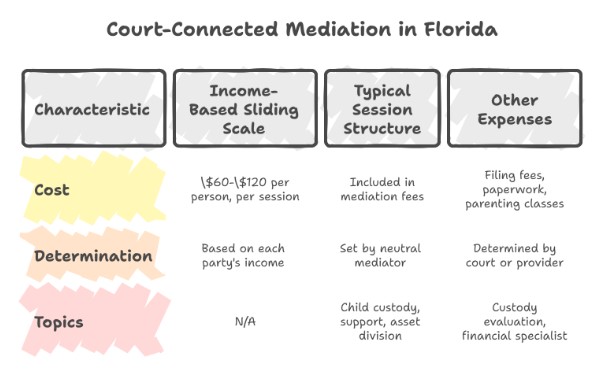
Court-connected mediation in Florida helps families settle divorce issues without a judge making every call. The courts set the costs, session structure, and additional expenses to ensure fairness and equity.
Florida courts use a sliding fee scale based on each party’s income. This makes mediation more affordable, especially for folks with lower incomes.
For example, if each spouse earns under $50,000 a year, the fee might be as low as $60 per person, per session.
Higher incomes increase the fee to approximately $120 per person, per session. Couples must provide proof of income before the first session.
This system ensures that people aren’t shut out of court-connected mediation simply because they earn less.
Most court-connected mediation sessions typically last around two hours. A neutral mediator leads the session and is trained in family law.
Both sides meet with the mediator in private, usually at a courthouse or mediation center.
At the outset, the mediator sets ground rules and explains their role—they don’t provide legal advice and review what needs to be settled.
Common topics include child custody, support, spousal support, and dividing assets. If you reach an agreement, the mediator writes a summary for the court. If not, you may need another session, or the case will be returned to a judge.
Besides mediation fees, divorcing couples may have to pay filing fees, charges for copying paperwork, and costs for required parenting classes if children are involved.
Sometimes, a court may request an outside expert, such as a custody evaluator or financial specialist. Their fees aren’t included in mediation costs.
Typically, the parties cover these additional costs directly to the provider. It’s wise to discuss these expenses during mediation so that no one gets blindsided later.
Private divorce mediation costs in Florida depend on the mediator’s experience, how many sessions you need, and how they bill.
Some charge by the hour, some by the session, and others have package deals. Most want payment up front.
Divorce mediators in Florida usually charge between $150 and $400 per hour.
Rates reflect the mediator’s training and how complicated your case is. Most mediators expect both spouses to split the cost, but occasionally they allow alternative arrangements.
Travel time, document review, and prep work can also be billed separately.
Sessions usually last two to three hours at a time. Some mediators bill only for time spent in session, but others add fees for calls, emails, or document work done outside those hours.
Sessions can happen in person or remotely. That flexibility is handy, honestly.
Billing practices can vary:
Always request a written fee agreement before commencing work. It just saves headaches down the road.
Some Florida mediators offer mediation packages that bundle hours or sessions for a set price.
A typical package might include 5–10 hours of mediation, document drafting, and help with court filing. For example:
| Package Type | What’s Included | Typical Cost |
| Basic | 3 hrs mediation + basic agreement | $600–$900 |
| Standard | 5–7 hrs + draft paperwork | $1,200–$2,000 |
| Premium | 10+ hrs + full-service document prep | $2,500+ |
Some packages let you pay once and cover everything, while others split the cost into installments. Packages can make budgeting easier, but if you need more time, extra hours will incur additional costs.
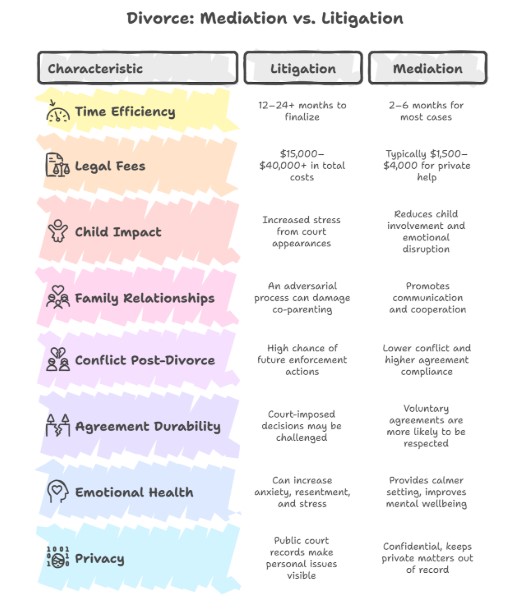
Mediation and court litigation follow different paths, and the financial demands are vastly different—the main differences lie in cost, extra fees, and the long-term financial impact.
Mediation is almost always cheaper. It typically ranges from $2,000 to $7,000, depending on the number of sessions required and the complexity of the issues.
Court litigation, though, can start at $15,000 and easily shoot past $30,000 per spouse once you add attorney fees and court costs.
Here’s a quick comparison:
| Benefit Type | Litigation Outcome | Mediation Outcome |
| Time Efficiency | 12–24+ months to finalize a divorce | 2–6 months for most mediated cases |
| Legal Fees | $15,000–$40,000+ in total costs | Typically $1,500–$4,000 for private mediation |
| Child Impact | Increased stress from court appearances | Reduces child involvement and emotional disruption |
| Family Relationships | An adversarial process can damage co-parenting dynamics | Promotes communication and cooperation |
| Conflict Post-Divorce | High chance of future enforcement actions or modifications | Lower conflict and higher agreement compliance |
| Agreement Durability | Court-imposed decisions may be challenged or ignored | Voluntary agreements are more likely to be respected |
| Emotional Health | Can increase anxiety, resentment, and stress for both parties | Provides calmer setting for resolution, improves mental wellbeing |
| Privacy | Public court records make personal issues visible | Mediation is confidential and keeps private matters out of public record |
Mediation involves a neutral third party to facilitate an agreement between both spouses. It can help reduce conflict and avoid costly legal battles.
Court litigation comes with numerous expenses beyond attorney fees. You may incur costs for expert witnesses, court reporters, and delays that result in accumulated billable hours.
Filing fees and motion fees add up. Missed work due to long hearings or depositions can be costly, and travel or childcare expenses during court dates don’t help either.
Honestly, the emotional stress can pile on more expenses, sometimes leading to extra time and money spent on therapy or health care.
The choices you make during divorce don’t just affect the upfront price tag. Mediation usually leads to quicker agreements and gives both sides more say in financial matters, such as child support and asset division.
This extra control can help you avoid costly mistakes and future fights. Litigation, on the other hand, can stir up hard feelings and make future cooperation pretty tough.
That tension might spark further legal battles over custody or changes in support. Lingering court orders or strict rulings can significantly impact your housing, retirement, and overall financial stability for an extended period.
Mediation enables you to find flexible solutions that work for both parties, often resulting in better long-term outcomes.
Ann Goade helps families in Martin and St. Lucie Counties resolve divorce matters without the courtroom drama—reach out now to schedule your mediation consultation.
If you’re ready to get started, call us now!
Divorce mediation costs in Florida can vary significantly based on session length, the mediator’s background, and local rates.
If you know how fees are set and billed—and use a few cost-saving tips—the whole process gets way more predictable.
Mediators here mostly charge by the hour, with rates from $150 to $350. Some offer flat fees for simple cases, especially if you’ve already worked out most issues.
A full mediation usually takes three to five sessions. If both sides come prepared and ready to cooperate, you might need fewer sessions.
The cost typically gets split between both parties. Other fees may also arise, such as initial setup or document review charges.
Some mediators tack on extra for reviewing legal documents or holding extra meetings. Always ask for a detailed price list before you agree to anything, so you’re not caught off guard.
You’ll find payment structures such as hourly, per-session, or flat-fee packages. Most mediators want a retainer upfront—think of it as a deposit.
Hourly billing is common, and you pay for the time spent in each meeting. With session fees, you receive a fixed price per meeting, making budgeting easier.
Some mediators offer flat-fee packages that cover a certain number of hours or specific services. That’s handy if you and your ex already agree on most things.
Usually, both sides split the payment unless you work out an alternative arrangement. Some mediators require payment before each session, while others bill you after each session. It’s best to clear up these details at the start—no one likes billing surprises.
Come prepared for every meeting. Bring all your financial documents, know what you want, and jot down topics you need to discuss.
When you agree on basic stuff like property, custody, or support outside of mediation, you spend less time (and money) in the room. That’s just common sense.
Take time to research and compare mediators in the Treasure Coast area. Some offer sliding-scale fees if you’re struggling financially. Always ask about hidden fees—better safe than sorry.
Understanding the variables that influence divorce mediation costs can help you budget effectively and avoid unexpected expenses.
Costs for divorce mediation on the Treasure Coast are all over the map. Figuring out which options fit your budget helps keep the process manageable for everyone.
Mediation can work for most budgets. Some mediators offer flat-fee packages, while others charge by the hour.
Flat fees typically cover the basics, including a set number of hours, document preparation, and some email correspondence. If you’re on a tight budget, look for free consultations, sliding-scale fees, or legal aid resources.
Some mediators even offer payment plans, which can make things less stressful. Here’s a quick comparison:
| Budget Type | Common Options | What’s Included |
| Low | Legal aid, sliding scale | Basic sessions, paperwork |
| Moderate | Flat fee, payment plan | More sessions, document prep |
| Higher | Hourly rates | Custom plans, extra support |
Selecting the right price plan helps you avoid unexpected costs. Always ask what’s included before you sign anything—seriously, don’t skip this step.
Getting value from mediation isn’t just about hunting for the cheapest deal. A good mediator helps both sides save time and stress by keeping communication on track.
Many people recognize the long-term benefits—lower legal fees and shorter divorce timelines—when they choose someone with solid experience. Seasoned mediators often wrap up cases faster, which means less money out of your pocket in the end.
Look for contracts that break down all the fees. Ask about extra charges for additional sessions or last-minute changes—nobody likes nasty surprises.
Comparing different mediators helps you find the right fit for your needs and your wallet. Reviews and referrals are gold when you’re picking a pro in the Treasure Coast divorce mediation market.
Ann Goade offers divorce mediation services across the Treasure Coast. She works directly with couples to help them reach fair agreements without having to drag things through the court.
Here’s what Ann’s mediation services include:
Clients meet in a private, confidential setting. Ann encourages open conversation and cooperation, rather than conflict—something many people appreciate.
The total cost depends on the number of sessions you require. Ann usually offers either a flat fee or hourly rates.
Some cases are resolved with fewer sessions, while others require more. Payment plans are available for those who need flexibility.
Divorce mediation on the Treasure Coast in 2025? It offers several solid benefits for many families.
This process lets both sides sit down together in a private, respectful space. You don’t have to duke it out in public or drag things through court.
Local mediators often guide people through challenging conversations. They’ll walk you through each step and help with questions about paperwork, property, or even child care.
Choosing the right mediator matters. You want someone who is familiar with Florida family law and has a good reputation among past clients.
If you’re interested, you can always reach out to local centers for more info or support.
Mediation can save you time, stress, and thousands in legal fees. Connect with Ann Goade for a cost estimate and personalized plan—schedule your Florida mediation session today.
How much does divorce mediation cost in the Treasure Coast?
Court-connected mediation costs $60–$120 per person per session, while private mediation ranges from $1,500 to $ 4,000 or more, depending on the mediator’s experience and the complexity of the case.
What counties in the Treasure Coast offer court-connected mediation?
Florida’s court-connected mediation programs are available in Martin County, St. Lucie County, and surrounding areas, with income-based fees and referral systems through the local family court.
Is private mediation faster than court-connected mediation?
Yes. Private mediation usually takes 2–6 months, while court processes may take longer, depending on case backlog and scheduling availability.
What affects the cost of divorce mediation?
Key cost drivers include the complexity of child custody, business ownership, property across multiple states, and the level of cooperation between spouses.
Do both spouses have to live in the Treasure Coast to use mediation?
No. As long as one spouse resides in Florida, you can mediate locally—or virtually—with a Stuart-based mediator, such as Ann Goade.
Is divorce mediation legally binding in Florida?
Yes. Once signed and submitted, mediation agreements are legally enforceable and can be filed with the court as part of your final divorce judgment.


Proudly Serving Areas
Navigation
Practice Areas
Contact Us